Before the First Fish: Mapping the Jobs Inside an Aquarium
A new aquarium works as a connected system, not a collection of gadgets. Learn how the tank, filter, heater, light, substrate, and maintenance tools fit together—and what to check when something goes wrong.
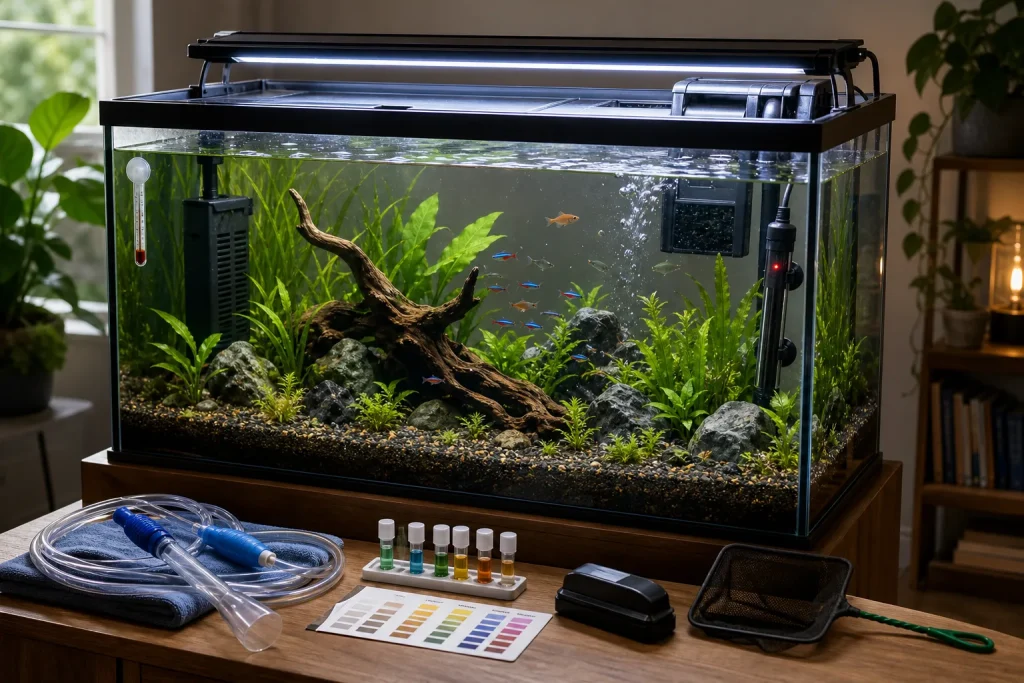
A new aquarium works as a connected system, not a collection of gadgets. Learn how the tank, filter, heater, light, substrate, and maintenance tools fit together—and…
Aquarium Basics · 8 min read
Is your new aquarium ready for fish, or is one part of the setup quietly undermining the rest? A tank can look complete while its filter is not moving water properly, its heater is warming unevenly, or its lid is leaving equipment exposed. Before choosing fish, trace what each part does and how a problem in one part can affect the others.
Think of the aquarium as a small system with several jobs: hold water safely, circulate and process it, keep conditions appropriate for the intended animals, and make routine care possible. The equipment does not replace maintenance, and no single device makes the aquarium ready on its own. When a problem appears, check the system in a sensible order instead of changing several settings at once.
Waterline And Tank
The aquarium holds the water and provides the space its future inhabitants will use. Its location and physical condition matter before any equipment is plugged in. A filled tank is heavy, so place it on a level, sturdy stand intended for that aquarium. Follow the manufacturer’s directions for support; do not assume a household table or a piece of furniture is suitable.
Look for a stable, level surface and leave enough access behind or beside the tank for cords, hoses, and cleaning. Keep the aquarium away from direct sunlight, which can encourage unwanted algae and heat the water unpredictably. Before filling, inspect the tank and seams, and make sure the stand does not rock. If the aquarium is already filled and you discover a concern with the support, do not try to shift it while full. Seek help from an experienced aquarium professional or the manufacturer about a safe response.
Choose a waterline that leaves room for circulation and any lid or light. Check that the filter intake stays submerged at the normal operating level. If evaporation exposes the intake, the filter may draw air instead of water. A lid can reduce splashing and evaporation, and it can prevent some fish from jumping out, but leave the openings needed for cords and ventilation as the equipment instructions require.
Filter And Circulation
The filter moves water through its media, where waste is captured or processed. The exact arrangement depends on the filter type, so use the product instructions to identify the intake, outlet, and media. The outlet should return water to the aquarium without creating a harsh current across every part of the tank. The intake should remain clear of gravel, leaves, and decorations.
A filter can be switched on and still fail to move water correctly. A blocked intake, a displaced cartridge, an air lock, or an incorrectly seated part may reduce flow. Start with the manufacturer’s troubleshooting directions. Check that the filter is assembled as intended, the intake is unobstructed, and the water level is suitable. Do not dismantle electrical equipment while it is plugged in. If a cord, plug, or housing appears damaged, stop using it and contact the manufacturer or a qualified repair professional.
Another common problem is assuming the filter alone handles every aquarium job. It does not heat water, replace water changes, or make an unsuitable stocking choice safe. It also needs routine attention. Follow the filter maker’s care instructions, and avoid replacing or washing all filter media at once unless the instructions specifically call for it. Sudden changes to the media can disrupt the biological processes that help handle fish waste.
Heater And Temperature
A heater is useful only if it suits the aquarium and the needs of the species you plan to keep. Check the heater manufacturer’s guidance for tank size, placement, and operation. Some models must be fully submerged; others have different requirements. Follow the label rather than guessing from the shape of the device.
Pair the heater with a separate aquarium thermometer in a visible spot. The heater setting is not the same as confirmation of the water temperature. If the reading seems wrong, check that the thermometer is placed in the water and functioning as intended, then compare it with the heater’s indicator and instructions. Avoid making a large adjustment based on one questionable reading. Give the system time to respond, and recheck before changing the setting again.
Uneven temperature can come from poor circulation, a heater placed contrary to its instructions, or a room that changes sharply in temperature. First check the equipment placement and filter flow. Then consider the room: a tank beside a sunny window, heating vent, or frequently opened exterior door may experience swings. If equipment seems faulty, follow the maker’s safety guidance and arrange a replacement or professional advice rather than improvising a repair.
Light And Lid
The aquarium light helps you see the tank and, if you plan to keep live plants, supports their growth. More light is not automatically better. A bright lamp left on for long periods can encourage algae, while a timer can make the daily schedule consistent. Start with the light maker’s guidance and the needs of the planned plants. Adjust one factor at a time if algae or plant stress appears, and look at the whole setup rather than blaming the lamp alone.
Check that the light is intended for aquarium use and is positioned securely. Keep plugs and connections away from splashes. Use a drip loop: let each cord hang below the outlet before it rises to the plug, so water running along the cord is less likely to reach the outlet. Keep the lid, light, and filter outlet arranged so the lid does not block circulation or interfere with safe equipment placement.
Substrate And Decorations
Substrate gives the aquarium floor its surface and can anchor plants or provide a foraging area, depending on what you choose to keep. Decorations create shelter and visual boundaries, but they should be aquarium-safe, stable, and free of sharp edges. Rinse new substrate and decorations as directed by the seller or manufacturer. Do not add household objects, painted ornaments, or collected materials unless you know they are safe for aquarium use.
Arrange hardscape so water can move around it and the filter intake stays accessible. A cave that blocks the intake or traps debris can complicate cleaning. A tall decoration that presses against the glass may also be difficult to remove without disturbing the setup. Leave a clear path for a siphon and algae scraper. That small planning choice makes routine care easier and reduces the temptation to skip it.
When Flow Fades
Likely causes: The filter intake may be blocked, the water level may be too low, or the filter may not be assembled correctly. Debris can also collect around an intake or outlet.
What to try, in order:
- Look at the water level and confirm that the intake is submerged as the filter instructions require.
- Check whether gravel, plant material, or a decoration is obstructing the intake.
- Inspect the outlet for a visible return flow. If there is none, follow the manufacturer’s steps for restarting or priming the filter.
- Unplug the filter before opening or cleaning it, and follow its care instructions.
- Restart it only when reassembled correctly. If flow remains weak or the unit makes an unusual sound, contact the manufacturer instead of forcing parts.
Do not respond by turning the filter to its highest setting without checking the problem. Stronger flow may not clear a blocked intake, and it can create an unsuitable current for some fish.
When Temperature Swings
Likely causes: The heater may be unsuited to the aquarium, incorrectly placed, malfunctioning, or affected by changing room conditions. A thermometer that is poorly positioned or faulty can also mislead you.
What to try, in order:
- Read the thermometer again and check its placement and condition.
- Compare the heater’s position and operating requirements with its manual.
- Check whether sunlight, a vent, or a draft is affecting the aquarium.
- Make only a modest adjustment within the range appropriate for the fish you intend to keep, then allow time for the water to respond.
- If the reading continues to drift or the heater looks damaged, stop relying on it and seek manufacturer or aquarium-professional advice before adding fish.
Say you have an empty aquarium in a room where afternoon sun falls across one side. You move the tank away from the window, confirm that the filter outlet moves water past the heater, and compare a properly placed thermometer reading with the heater instructions. The expected observable result is a more stable reading after the room and equipment have had time to settle—not an immediate change that proves the setup is ready for fish.
When Maintenance Feels Awkward
Likely causes: The filter is hard to reach, the decorations block the cleaning route, or cords and hoses have been arranged without room for routine work. A setup that is difficult to maintain is easy to neglect.
What to try, in order:
- Identify where a siphon bucket can sit without pulling on the aquarium or creating a tripping hazard.
- Make sure the filter can be opened and serviced according to its instructions.
- Move loose decorations away from the intake and leave enough space to clean the glass.
- Secure cords so they do not hang in the water or become strained when equipment is serviced.
- Keep a dedicated aquarium siphon, algae scraper, and bucket near the tank, but use that bucket only for aquarium care.
Convenience is not cosmetic. It helps you notice leaks, unusual sounds, reduced flow, and debris before those small signs become harder to address.
Check Before Choosing
Once the parts are in place, run the aquarium as directed by the equipment makers and confirm that the filter, heater, light, and lid work together. Inspect the stand, cords, waterline, flow path, and access for cleaning. Read about the needs of candidate fish before buying them; species differ in their space, temperature, current, and social requirements. Do not choose fish simply because they fit the tank visually.
Also learn how to establish the aquarium’s biological filtration before stocking it. A running filter is not, by itself, evidence that the system can handle fish waste. Follow a reputable aquarium-care method, use appropriate supplies, and verify readiness with suitable water tests before adding animals. If a reading, equipment instruction, or symptom is unclear, ask a qualified aquarium professional rather than making a guess.
One useful final check is to imagine doing ordinary care while the tank is running: Can you see the thermometer, reach the filter, and remove debris without dismantling the layout? If not, adjust the empty setup now. A little access and a clear equipment plan make it easier to respond calmly when the first real problem appears.
Keep looking

Better Together: A Practical Guide to Coordinating an Online Gaming Team
A multiplayer session can unravel without anyone playing especially badly. One player starts a fight while…