Better Together: A Practical Guide to Coordinating an Online Gaming Team
A multiplayer session can unravel without anyone playing especially badly. One player starts a fight while another searches for supplies. Two teammates spend their strongest abilities on the same minor threat. Someone heads toward the objective, assuming everyone else is following. These…

A multiplayer session can unravel without anyone playing especially badly. One player starts a fight while another searches for supplies. Two teammates spend their strongest abilities…
Aquarium Basics · 5 min read
A multiplayer session can unravel without anyone playing especially badly. One player starts a fight while another searches for supplies. Two teammates spend their strongest abilities on the same minor threat. Someone heads toward the objective, assuming everyone else is following. These problems rarely need a complicated solution. They need a shared approach. Whether you play cooperative missions, competitive objective modes or survival adventures, the most useful improvement is often learning to make decisions together rather than simply performing better alone.
Start by agreeing on what the session is for. A group trying to complete its first difficult mission should behave differently from one experimenting with unfamiliar equipment. Before entering a match, choose a clear priority: finish the objective, practice a particular role, explore a new area or attempt a harder challenge. Keep it narrow enough to guide decisions. “Improve tonight” is vague; “stop splitting up during the final encounter” gives everyone something observable to work on. This agreement also prevents tension when one person wants efficient progress and another wants room to experiment.

Next, make the group easy to organize. Use a recognizable party or custom-session name, such as 1gom dev, if the game supports one, and confirm the mode, difficulty and expected session length before launching. These small details reduce avoidable confusion, especially when friends join at different times. Check any requirements that could block someone from participating, including tutorial completion, equipment restrictions or unlocked mission access. Sorting out setup first is more considerate than discovering a problem after the rest of the team has committed to a long activity.
There are two useful approaches to teamwork: fixed roles and flexible roles. Fixed roles assign clear responsibilities, such as defending a position, gathering resources or supporting teammates. They work well when encounters demand reliable coverage or when the group is still learning. Flexible roles let players switch responsibilities as conditions change. They suit unpredictable matches but require better awareness. Neither approach is automatically superior. A practical starting point is to give each player one primary responsibility and one backup duty, so the group has structure without becoming helpless when someone is unavailable.
For example, imagine a four-player team escorting an objective through a contested area. One player watches the route ahead, another protects the rear, a third handles nearby threats and the fourth stays close to the objective. Those assignments should not become rigid rules. If the forward player is forced back, the nearest teammate temporarily covers that angle. If the objective stops moving, someone checks why rather than assuming its assigned player will solve everything. Responsibilities should make action easier, not create excuses to ignore an obvious problem.
Communication works best when it helps someone make the next decision. Compare “Over there!” with “Two opponents approaching the left entrance; hold the doorway.” The second call gives a location, a threat and a proposed response. You do not need constant narration. Prioritize information teammates cannot easily see: a dangerous enemy, an exhausted defensive ability, a missing resource or a change of plan. When voice chat is unavailable or unwelcome, use pings consistently. Repeatedly marking everything can bury the important signal just as easily as talking over everyone.
Choose a simple rule for commitment. Many teams lose progress because half the group attacks while the other half retreats. Agree on a short call for moving in and another for disengaging. Then define what makes those calls sensible. You might push when everyone is nearby and key abilities are ready, or withdraw when the objective no longer needs defending. The exact conditions depend on the game. What matters is that players can recognize them. A coordinated, reasonably timed decision is often more useful than four individually clever decisions that contradict one another.
Resource management is another place where cooperation outperforms improvisation. Before a demanding encounter, briefly check health, ammunition, consumables and ability availability where those systems apply. Share scarce supplies according to the next task rather than habit. A player covering a distant approach may need ammunition more urgently than someone moving between safe positions. Avoid spending every powerful tool at the first sign of resistance, but do not hoard everything for a perfect moment that never arrives. Decide which resources handle ordinary pressure and which are reserved for a specific emergency.
Progression choices should support the team's current obstacle. Chasing a higher equipment number can be less helpful than choosing an option that solves a recurring problem. If teammates repeatedly struggle to recover after mistakes, a defensive or recovery-focused setup may contribute more than additional damage. If the group survives comfortably but cannot complete an objective in time, greater offensive pressure may be appropriate. Test one meaningful change at a time when possible. Changing equipment, roles and tactics simultaneously makes it difficult to understand what actually helped.
After a failed attempt, keep the review short and concrete. Identify the first decision that made the situation difficult, not just the final mistake everyone noticed. Perhaps a late retreat began with poor positioning several moments earlier. Perhaps a missed objective followed an unnecessary pursuit. Ask what happened, what the team could control and what it will do differently next time. Avoid turning the review into a ranking of players. A useful adjustment sounds like “regroup before entering the next room,” not “everyone needs to play better.”
Finally, protect the quality of the session itself. Take a break when frustration starts replacing attention, and make it easy for someone to say they need to stop. End with a brief note about one thing that improved and one thing worth revisiting. Better teamwork does not require elaborate strategies or a designated expert directing every move. It grows from clear goals, understandable responsibilities and small adjustments that everyone can follow. When the group shares a plan and knows how to revise it, even a difficult match becomes a more rewarding experience.
Keep looking
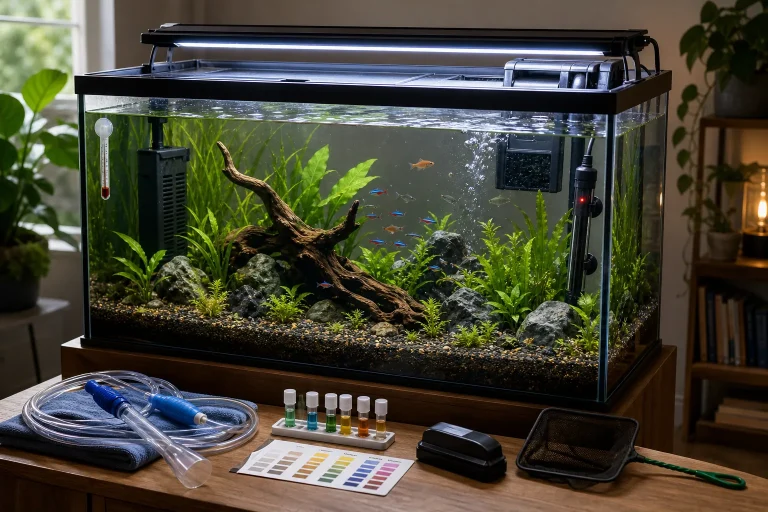
Before the First Fish: Mapping the Jobs Inside an Aquarium
A new aquarium works as a connected system, not a collection of gadgets. Learn how the…