When a Fish Hides: Reading Behavior Before Changing the Tank
A fish tucked behind a plant may be resting, avoiding a tankmate, or reacting to a change. Compare observation approaches and choose a response that fits the pattern, not a single glimpse.
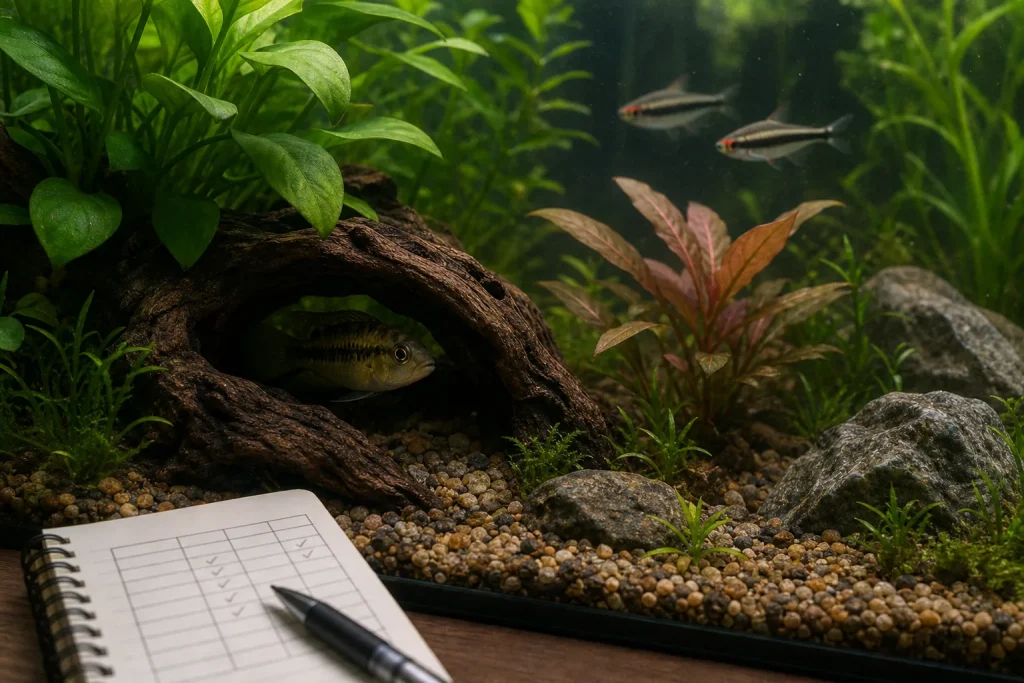
A fish tucked behind a plant may be resting, avoiding a tankmate, or reacting to a change. Compare observation approaches and choose a response that fits…
Fishkeeping · 5 min read
Is your fish hiding because it feels unsafe, or is it simply resting out of sight? Before moving décor, changing the light schedule, or rearranging the tank, note when the fish disappears, where it settles, and what else is happening. One quiet observation can prevent a well-meant change from adding more stress.
Hiding is a behavior, not a diagnosis. Some species spend much of the day under cover. A newly introduced fish may need time to explore, while a fish avoiding a particular tankmate may be responding to pressure. The useful question is not just “Where is it?” but “What happens before and after it hides?”
Start With A Baseline
Watch the aquarium from a short distance before approaching the glass. Sudden movement, tapping, or lifting the lid can change what you are trying to observe. Check at familiar times, such as before feeding and after the room has settled, and keep the routine consistent.
Record a few plain details in a notebook or phone note: which fish hides, its usual hiding place, the time, recent activity, and whether it comes out to eat. Note any recent changes, too. These might include adding a fish, moving a plant, changing a light timer, or cleaning the tank. A short dated entry is more useful than a vague impression that the fish “seems shy.”
Also look for signs that call for more than observation. Watch for rapid or labored breathing, clamped fins, loss of balance, visible injury, unusual spots or patches, and refusal of food alongside a marked change in behavior. If you see concerning signs, check water conditions with an appropriate aquarium test kit and seek advice from an aquatic veterinarian or qualified fish-health professional. Do not treat a suspected illness with medication chosen at random.
Choose A Watching Method
There are three practical ways to observe a hiding fish. Each suits a different situation, and you can combine them as long as you keep the routine calm.
Quiet, Direct Watching
Sit near the tank and watch without interacting. This suits a fish that is eating and swimming normally but appears only at certain times. Notice whether it uses one shelter consistently, moves around when the room is quiet, or retreats when people approach. Avoid hovering over the tank for long stretches; a watchful observer can become another source of disturbance.
Routine-Based Notes
Use a small log if the behavior seems tied to a schedule. Write down observations around feeding, room activity, and the aquarium light turning on or off. This works well when you cannot watch for long or several household members use the room. Ask everyone to describe what they saw rather than interpret it: “came out while food was added” is clearer than “looked scared.”
Targeted Observation
Focus on a likely trigger when you have a specific question. For example, watch the fish during a normal feeding to see whether a tankmate blocks its route, or observe the area near a shelter for brief chasing. Choose this approach when a repeated pattern points to a possible interaction. Do not provoke a chase or repeatedly startle the fish to see how it reacts.
Pick quiet watching when the fish otherwise seems well and the trigger is unclear. Choose routine-based notes when timing may matter. Use targeted observation when you have a clear, safe question about a tankmate or location. In every case, change one thing at a time only after the notes suggest a reason.
Read The Pattern
Compare the fish’s behavior across ordinary moments. A fish that hides during busy room activity but emerges when the room is quiet may be responding to movement outside the aquarium. A fish that uses cover yet comes out to feed and swims normally may simply prefer shelter. Neither pattern alone proves a problem.
Look for links between the fish and its tankmates. Is it repeatedly chased away from food or a shelter? Does it retreat only when another fish approaches? A brief interaction may not tell you much, so note whether it recurs and whether the fish can access food and refuge. Also consider the layout: a tank with exposed open space and little cover may leave a naturally cautious fish with nowhere to settle.
Say you notice a small fish hiding behind a driftwood arch each afternoon. It comes out to eat, then retreats when a more active tankmate swims close. You note the pattern without moving anything. If the same fish continues to be displaced from food, a reasonable next move may be to review feeding access and add a suitable visual barrier or shelter, rather than shifting the whole layout at once. Then observe whether the fish can feed and use the tank more comfortably.
Make One Calm Change
If the pattern points to a specific issue, choose the smallest adjustment that addresses it. A cluster of plants or a safe aquarium ornament can create a visual break. If a tankmate appears to be blocking food, consider whether food is reaching more than one area. Keep the aquarium’s inhabitants and existing layout in mind; added décor should be aquarium-safe, stable, and arranged so fish cannot become trapped.
Change one feature, then give the fish time to respond under its normal routine. Keep the light schedule, feeding habits, and other décor steady while you observe. If you alter several things at once, it becomes harder to tell which change helped or caused a new difficulty. Avoid chasing a hidden fish with a net or lifting shelters to force it into view.
When no clear trigger appears and the fish eats, swims, and breathes normally, leave the tank undisturbed and continue brief notes. If the behavior worsens, the fish stops eating, or physical signs appear, check water conditions and contact a qualified aquatic professional. The most useful decision is often the least dramatic one: observe first, respond to a repeated pattern, and keep the fish’s access to food, shelter, and calm space in view.
Keep looking

Better Together: A Practical Guide to Coordinating an Online Gaming Team
A multiplayer session can unravel without anyone playing especially badly. One player starts a fight while…
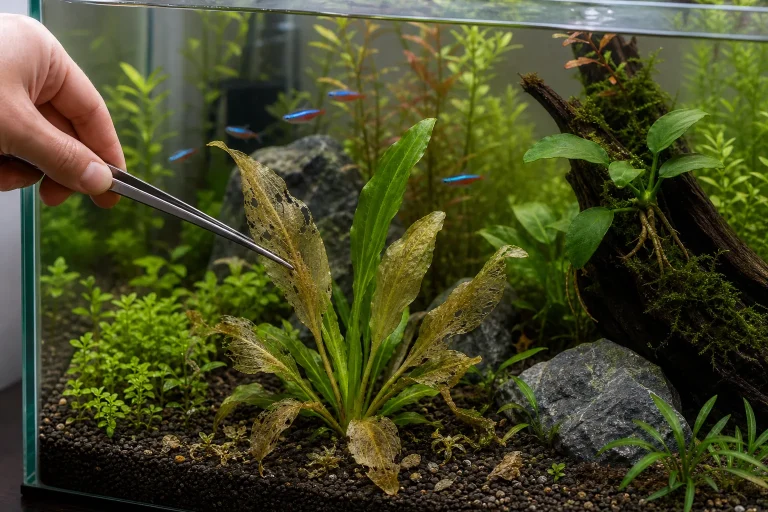
Why Aquarium Plants Melt After a Move
A plant can shed damaged leaves after entering a new tank without being beyond recovery. Learn…