The Water Test Log: Making Readings Useful Over Time
A water reading makes more sense beside the date, test method, recent maintenance, and the aquarium’s normal pattern. Set up a simple log that helps you decide what to check next without reacting to one result alone.
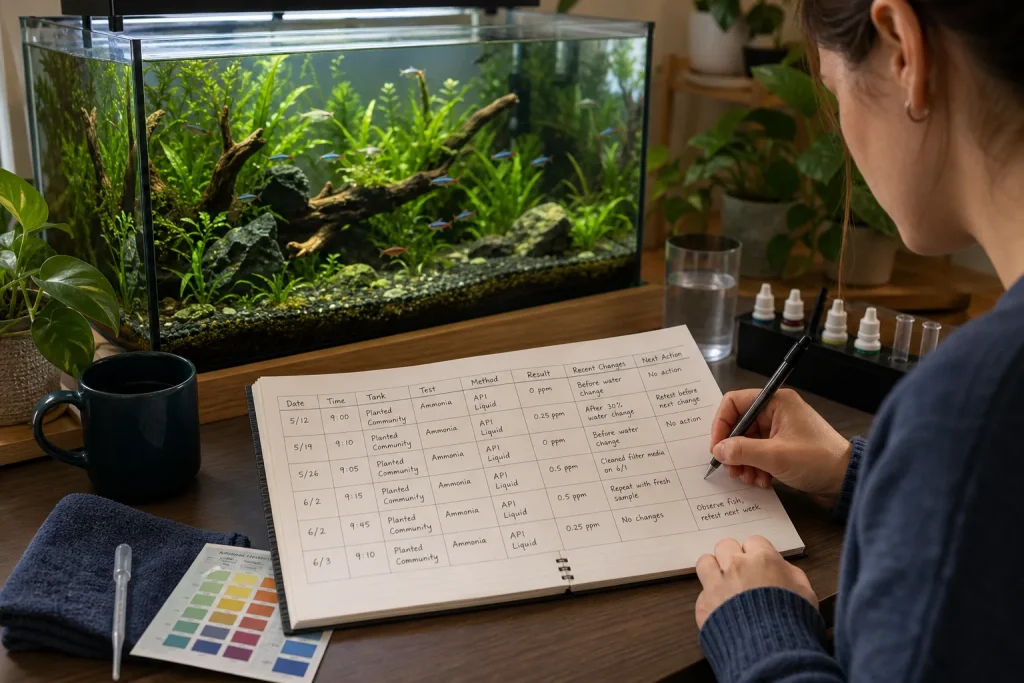
A water reading makes more sense beside the date, test method, recent maintenance, and the aquarium’s normal pattern. Set up a simple log that helps you…
Water · 6 min read
Did a test-kit result change, or did the way you tested change? A reading can look alarming on its own, yet mean something different when you compare it with the aquarium’s usual pattern and note what happened before the test. A useful log gives you that context, so you can decide whether to retest, investigate, or simply keep observing.
Choose your logging style
The right log is the one you will update consistently. Choose a paper notebook if you keep test supplies together and prefer a quick handwritten record. Use a spreadsheet or notes app if you want to search by date, sort readings, or keep photos beside entries. Avoid building a complicated system before you know what information you actually use.
- Choose a notebook if you test at a regular spot and want to write results immediately. Reserve a page for each tank.
- Choose a spreadsheet if you keep several aquariums or want to compare readings across dates. Give each tank its own tab or clearly marked section.
- Choose a notes app if you are more likely to record a result on your phone. Keep entries in one note per tank, rather than scattering them among unrelated reminders.
In any format, record the same core details: date, time, tank, test method, result, recent changes, and your next action. Add the name of the test kit or meter when you use more than one kind. A result without its method may be difficult to compare with a later one.
Start with a stable tank
If the aquarium is established and its inhabitants appear normal, build a baseline before changing your testing routine. Record readings on the days you already test. Include the aquarium’s usual maintenance context, such as whether you tested before or after a water change, and note any feeding or equipment changes that seem relevant.
Use the same procedure each time. For a liquid kit, check the instructions for sample volume, reagent order, mixing, and the required wait. Use a clean sample container, and read the color under similar lighting when the kit calls for a color comparison. For a digital meter, follow its calibration and cleaning directions. A different method can produce a result that is not directly comparable to the earlier one.
Say you keep a planted community tank and usually test before your scheduled water change. One week, you test after replacing water and record that timing beside the result. The next entry is taken before maintenance as usual. That note helps explain why the readings may differ; it keeps you from treating them as though the test conditions were identical.
Sort out a new setup
If the aquarium is newly assembled, or its biological filter is still becoming established, use the log to track the process rather than to declare the tank ready based on one favorable result. Record the readings relevant to your setup and livestock plan, along with any changes you make. Follow the directions for your chosen test method and use established aquarium guidance when deciding whether the water is suitable for a particular fish.
Keep entries close together when you are monitoring a changing setup, but do not change several things at once just to make the log look active. If you add a product, adjust the filter, or replace water, note what you did and when. That way, a later result can be considered alongside the action instead of being mistaken for an unexplained shift.
If a reading is unexpected, repeat the test carefully with a fresh sample and clean equipment. Check the kit instructions and expiration information, and consider whether the sample or lighting could have affected your reading. Do not use a log as a substitute for promptly addressing a clear livestock emergency. For persistent uncertainty about water safety or fish distress, consult a qualified aquarium professional or aquatic veterinarian.
Handle a sudden change
If a result differs sharply from the entries around it, first confirm that the comparison is fair. Check that you tested the same tank, used the same method, followed the same timing, and read the test as directed. Then repeat the measurement if the method allows. Write down both results rather than silently replacing the first one.
Next, review recent events: a water change, filter cleaning, medication, new livestock, a change in feeding, or an interruption to equipment. These notes do not prove what caused the result. They help you choose a sensible next check. If the repeated result remains concerning, use guidance specific to the parameter and aquarium, and avoid making multiple corrective changes without understanding their possible effects.
For example, imagine a keeper sees an unusual ammonia result after cleaning filter media. They record the first reading, check the kit instructions, and repeat the test with a fresh sample. They also note what was cleaned and when. If the result persists, the keeper seeks aquarium-specific advice and monitors the fish rather than assuming the first number tells the whole story.
Compare patterns fairly
Compare like with like: the same tank, parameter, test method, and approximate point in the maintenance routine. Look across several entries and ask whether the readings are steady, gradually changing, or repeatedly different after a particular event. A single entry can prompt a careful recheck; a pattern can point toward a useful question to investigate.
Keep units and result formats intact. If a kit reports a range or color category, record that format rather than converting it from memory. If a result falls between color blocks, note that uncertainty. Do not add extra decimal places to a reading that the tool cannot reliably distinguish.
Mark missing entries plainly. A blank space does not mean the water was normal. If you skipped a test, write “not tested” and, if useful, why. This prevents later comparisons from implying a continuous record where there was none.
Make each entry actionable
End each note with a modest next action, not a diagnosis. Useful entries include “repeat with a fresh sample,” “check the kit instructions,” “observe fish behavior,” or “compare again at the usual point in maintenance.” If you make a change, state exactly what changed and when. That makes the next reading easier to interpret.
Keep observation separate from interpretation. Write “fish stayed near the surface” as an observation, then note “check aeration and water conditions” as a planned action. This distinction keeps assumptions from becoming part of the record as if they were measured facts.
Keep the log usable
Review the record when you are already doing routine aquarium care. Look for missing context, inconsistent methods, or repeated changes around the same event. If the log is becoming cumbersome, remove fields you never use, but keep the details needed to compare readings honestly.
A water log is most useful when it helps you slow down at the right moment. Record the method, preserve unexpected results, and compare similar conditions before deciding what a reading means. When a pattern remains unclear or fish are in distress, use qualified aquarium or veterinary guidance rather than asking a notebook to make the decision for you.
Keep looking

Better Together: A Practical Guide to Coordinating an Online Gaming Team
A multiplayer session can unravel without anyone playing especially badly. One player starts a fight while…
When a Fish Hides: Reading Behavior Before Changing the Tank
A fish tucked behind a plant may be resting, avoiding a tankmate, or reacting to a…