Why Aquarium Plants Melt After a Move
A plant can shed damaged leaves after entering a new tank without being beyond recovery. Learn what changes trigger melt and how to respond without adding more stress.
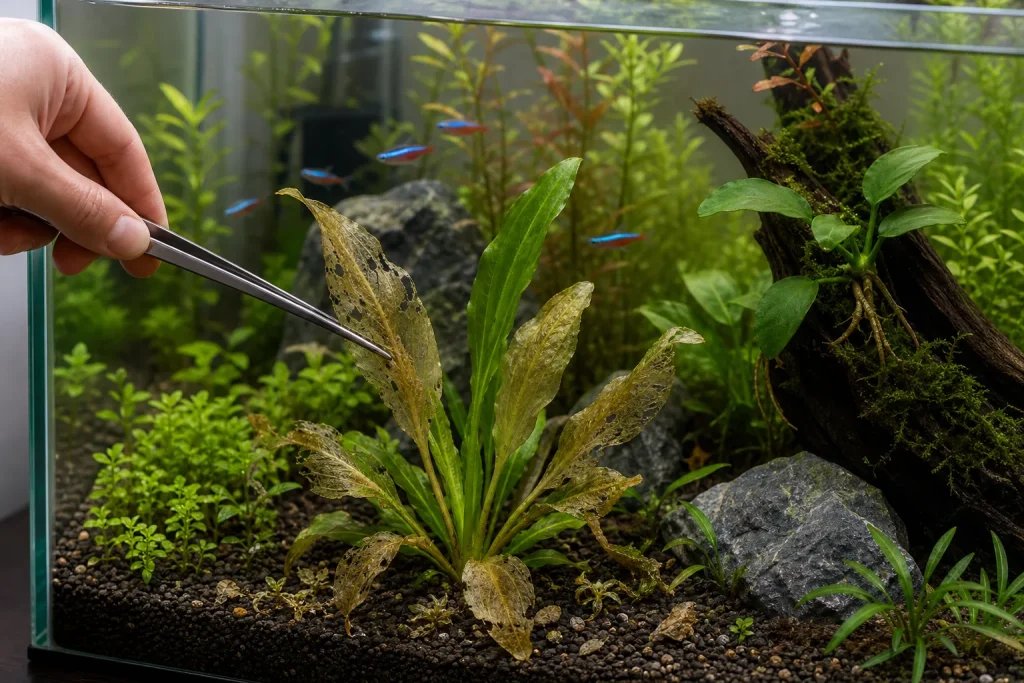
A plant can shed damaged leaves after entering a new tank without being beyond recovery. Learn what changes trigger melt and how to respond without adding…
Plants · 6 min read
Why are the leaves turning translucent or falling apart just after you moved the plant? Often, the plant is adjusting to a different light, water chemistry, temperature, or planting position. Remove the damaged tissue, keep conditions steady, and watch the healthy growth points before deciding the plant is lost.
“Melt” describes the breakdown of leaves after a change in conditions. It is common with some aquarium plants, especially when leaves grown in air must adapt to life underwater. These six checks can help you distinguish ordinary adjustment from a problem that needs attention.
Check How It Was Grown
Many aquatic plants are sold with leaves grown emersed, or above water, in humid conditions. Those leaves may look firm and healthy in the shop, yet struggle when submerged. The plant may shed them while producing leaves suited to underwater growth. This transition can happen even if the tank itself is stable.
Look at the plant’s growing point, stem nodes, or rhizome rather than judging it by its oldest leaves. If the base is firm and new growth is emerging, remove leaves that have turned soft or translucent and give the plant time. Avoid pulling up a rooted plant repeatedly to inspect it; disturbing the roots adds another change.
Some species are not meant to have their rhizomes buried. Anubias and Java fern, for example, are commonly attached to wood or rock, with the rhizome exposed. Burying that thick horizontal stem can cause decay that resembles adjustment melt. If you see the rhizome covered, gently reposition the plant so its roots can sit in the substrate while the rhizome stays uncovered.
Compare the Lighting
A plant moved from a shaded shop tank to a bright spot beneath an aquarium light faces a sudden increase in light. The reverse can happen when a plant is tucked behind hardscape or beneath floating plants. Leaves adapted to one level may deteriorate while the plant adjusts to the other.
Check the light schedule and the plant’s position. Keep the schedule consistent rather than extending it to “help” a struggling plant. If the new location is much brighter, try a spot with gentler light or use floating plants for shade. If it is heavily shaded, move it gradually toward an open area instead of shifting it several times in quick succession.
Algae on leaves can make a plant look worse, but scrubbing fragile tissue may do more harm. Remove leaves that are disintegrating. Leave firm leaves in place while you stabilize the plant’s location and lighting.
Review Water Differences
Water from a store, transport bag, or previous aquarium may differ from the new tank in temperature, pH, hardness, and mineral content. A plant can react to that shift even when both aquariums are suitable for keeping plants. Water conditioner addresses chlorine or chloramine in tap water; it does not make two aquariums chemically identical.
Check that new water is treated with a conditioner appropriate for your local supply, and avoid adding a plant straight into water that is noticeably colder or warmer than its transport water. For future moves, let the plant adjust gradually in a clean container of aquarium water, keeping it away from direct sun and household contaminants. Follow the plant supplier’s handling advice if available.
Do not chase small changes in pH or add products simply because leaves are melting. Repeated chemical adjustments can create more swings. If you suspect a water-quality issue, use a reliable aquarium test kit and consider advice from an experienced aquarium shop or aquatic-plant specialist.
Inspect the Planting Position
A change in surroundings includes more than the water. A plant may be crushed under a rock, shaded by a newly placed decoration, or planted too deeply in gravel. Stems and roots also respond poorly to repeated uprooting as you rearrange the aquascape.
Check whether the plant is sitting as its species requires. Rosette plants such as Amazon swords are generally planted with their roots covered and the crown left clear. Rhizome plants such as Anubias should not have the rhizome buried. Stem plants need a stable hold in the substrate, but their growing tips should remain above it.
Move the plant only if you find a clear placement problem. Use clean fingers or aquarium tweezers, work gently, and avoid crushing the roots. Once positioned, leave it alone while you observe the remaining healthy tissue.
Look for Nutrient Changes
A plant moved from a well-established planted tank into a bare or newly set-up aquarium may no longer receive the same nutrients. Substrate, fish waste, water changes, and liquid fertilizer all affect what is available. A leaf can also deteriorate because it was already damaged before the move, so do not assume every melting leaf signals a fertilizer shortage.
Check the plant label and your substrate. Root-feeding plants may benefit from aquarium-safe root tabs placed near the roots, while water-column feeders may use an aquarium fertilizer according to its label. Do not add several products at once. That makes it harder to identify what the plant needs and can contribute to unwanted algae.
Say you move a sword plant from a nutrient-rich display tank into plain sand. If its older leaves soften but the crown remains firm, you could remove only the decaying leaves, add a suitable root tab as directed, and keep the lighting unchanged. New growth from the crown would be a more useful sign than the condition of the leaves that formed before the move.
Separate Melt From Decay
Normal adjustment usually affects older leaves first while some part of the plant remains firm and alive. A worsening problem may involve a soft crown, a mushy rhizome, a foul smell, or rapid breakdown spreading through the plant. Those signs call for inspection of the plant’s position and the tank’s conditions, not just patience.
Use clean aquarium scissors to trim leaves that are clearly dead or dissolving. Remove loose debris so it does not accumulate in the tank. For a stem plant, cut back to a firm section with healthy nodes. For a rhizome plant, keep any firm, healthy portion and remove tissue that has become soft. If the whole base is mushy, remove the plant before it decays further in the aquarium.
After trimming, keep the light schedule, water-change routine, and plant location steady. Avoid adding new fish, changing the substrate, and rearranging decorations all at once. If other plants or fish show signs of distress, assess the aquarium as a whole and seek qualified aquarium-care advice rather than treating the plant in isolation.
Watch the New Growth
Old leaves rarely become healthy again once they have turned transparent or collapsed. Focus instead on whether the growing tip, crown, or rhizome remains firm and whether fresh leaves appear. New underwater leaves may look different from the plant’s original foliage, so compare their shape and texture rather than expecting an exact match.
Take a clear photo when you first notice the melt, then compare it with later observations. Keep notes on changes you make, such as moving a plant into shade or adding a root tab. Change one factor at a time where possible. That makes it easier to see whether the plant is stabilizing or whether another cause needs attention.
A move can cost a plant some leaves without costing it the whole plant. Trim only tissue that is clearly failing, correct an obvious planting or water-handling problem, and give healthy growth points a stable place to recover.
Keep looking

Better Together: A Practical Guide to Coordinating an Online Gaming Team
A multiplayer session can unravel without anyone playing especially badly. One player starts a fight while…
When a Fish Hides: Reading Behavior Before Changing the Tank
A fish tucked behind a plant may be resting, avoiding a tankmate, or reacting to a…